Introduction: A mall atrium cleaning inquiry moves faster when you define the work window, glass access, water, noise limits, and machine configuration before you contact suppliers.
Atrium glass is highly visible and difficult to reach. It rises above escalators, faces coffee shops, and sits under a skylight that cannot be opened for access. There is no roof rig, no davit arm, and no practical place to hang a cradle. The property team either books a rope access crew that needs anchor points and a closed-off floor zone below, or it looks at a machine that can be carried in, set up on the floor plate, and driven across the glass. The second route is worth pricing properly, and it starts with a short, specific inquiry rather than a general request for a catalogue.
The shape of an atrium rules out most exterior cleaning methods before cost even enters the conversation. An outdoor facade job assumes a parapet to hang from, a davit arm on the roof, or ground-level space for a boom lift. An atrium offers none of that. The glass is indoors or semi-indoors, the floor below is polished stone in the main circulation route, and the ceiling structure above is usually closed off. Scaffolding is possible in theory, but it requires a night build, floor-loading checks, and a strip-out before the shutters go up. The other fixed constraint is the drop zone. Rope access needs an exclusion area directly under the work face. In an atrium, that area is where customers walk, where escalators land, and where tenant signage sits. Facility teams plan around disruption, water use, and noise long before they compare machine prices, because those factors decide whether a job can run inside a trading building with tenants a few metres away. That is what separates a supplier that understands atrium operations from one quoting only exterior facade work. One quotes square metres and climbing height. The other asks what time your cleaners can be on the floor, how wide the service lift is, where the nearest water tap sits, and whether machine noise will carry into a restaurant mezzanine at 7 a.m. If a supplier never asks those questions, the quotation will describe a machine rather than a workable night.
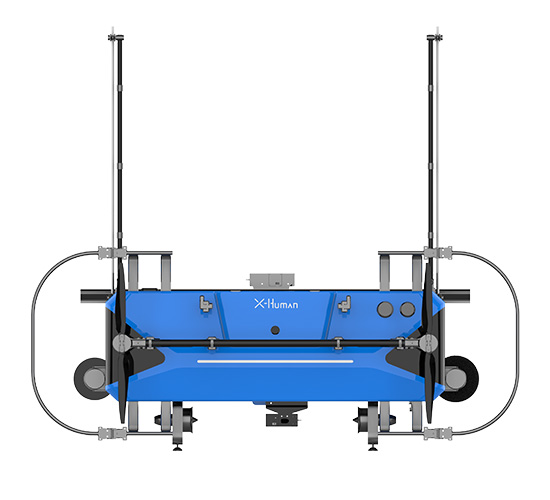
Water is usually the first thing an atrium job exposes. Running a hose across a marble floor from a distant service sink is a trip hazard, a slip risk, and a complaint waiting to happen. The J1 SE carries a 40 L external tank and uses a stated 200 ml/min in wet mode, which works out to about 12 L per hour. At that rate, a full tank provides about 3 hours 20 minutes of continuous spraying, so plan the night around the machine's refill point rather than a fixed schedule. Refill from a nearby service tap, keep the supply hose off the floor, and clean the glass nearest the water point first while the tank is full. Noise and control decide whether the work window holds. The design is built for low-noise operation, and single-operator remote control means one person stands on the floor plate with the controller instead of coordinating a roof team, a spotter, and a suspension crew. Setup and pack-down stay within the floor team's control. Path planning and automatic edge sensing matter just as much in an atrium, because these glass walls are divided by mullions, framed by balustrades, and end at returns and door heads. The machine follows the panel lines and reads the edges itself, which reduces the stop-start repositioning that eats a short overnight window. Ask the supplier what sound information they can provide for the working distance in your space, and run a dry pass before a wet pass on tenant-facing glass. Coverage is where the machine earns its place on the schedule. At the stated 432 ㎡/h, a 600 ㎡ atrium glass wall takes about 1 hour 25 minutes of cleaning pass time before setup, refills, and repositioning. If your overnight window is long enough, that leaves time for setup, refills, and a second pass on the dirtiest panels. The stated climbing height is 30 m, which fits many atrium glass walls and internal courtyards; check your actual wall height against that figure. The machine crosses gaps up to 5 mm. Map deep reveals, projecting mullion covers, and thick structural frames above 5 mm before planning full-wall coverage.
A vague inquiry slows the process. A message that says "we need a window cleaning machine for our atrium, please send price" gets a generic reply, and you spend three emails getting to the point where a supplier can configure something. Send four pieces of information with your first message:
Then review what comes back. A useful response describes the machine configuration, how many people are on site, what consumables the work needs, and which spare parts you should hold. Ask any building cleaning robot manufacturer the same four questions you would ask a window cleaning machine supplier: what is the price and MOQ, what is the lead time, what training comes with the unit, and what does the quotation include in writing. Keep the answers in one document so the comparison stays consistent across suppliers. Use written answers for noise limits, water access, and quotation terms so the inquiry and the offer stay aligned.
Cleaning a shopping mall atrium is an access problem first and a cleaning problem second. Once you know your work window, refill points, noise limits, and glass obstructions, choosing a machine becomes straightforward. The J1 SE is designed for this type of work: a 40 L external tank that removes the need for a supply hose across the floor, a stated 200 ml/min water rate for tank planning, low-noise design, single-operator remote control, automatic edge sensing, and path planning across panel lines, within a stated 30 m climbing height and a 5 mm gap limit. Send your atrium drawings, the hours your team can work, and the location of your water and power points. We will respond with a configuration, a written quotation, and the consumables and training details you need to plan the first night.
A: Focus on four things: how the machine handles water without dragging a hose across the floor, what sound information the supplier can provide for the working distance from tenants, how one operator controls it from the floor plate, and how it reads panel edges and mullions. Coverage rate and stated climbing height then tell you whether it fits your atrium within the work window.
A: The tank removes the need for a hose run across polished mall flooring, which is a significant slip and trip risk in an atrium. At the stated 200 ml/min, 40 L provides about 3 hours 20 minutes of continuous wet spraying, so plan refills from a nearby service tap as part of the night's sequence rather than around a fixed interval.
A: Prepare the work window and access route, the glass height with panel widths and mullion gap sizes, the nearest water tap and battery charging point, and the noise limits your tenants and trading hours impose. Add floor-level photographs and a facade drawing, and ask for price, MOQ, lead time, training, and written quotation terms.
Guide F: Energy efficiency in buildings (2012)
World Green Building Council: Sustainable Building Operations